BERGERecotrail Performance LTOe
More Payload per Charge
Logistik Schmitt has been electrifying its fleet for years – but the heavy batteries in the electric tractor units place additional strain on the drive axle and reduce the payload. Schmitz Cargobull has solved the problem with the lightweight BERGERecotrail Performance LTOe tarpaulin semi-trailer and trailer axles moved forward by 60cm: 40 of these trailers are already in use at Logistik Schmitt.
Logistik Schmitt, based in Bietigheim in Baden, is undoubtedly a pioneer in electric mobility within the transport sector. The company has been electrifying its fleet since 2019 – today, 55 of its approximately 100 tractor units are electric, including one of the very first eActros 600s ever produced. “We initially thought sustainability was our main motivation. But for the past two or three years, we’ve realised that it also offers a significant economic advantage,” says Rainer Schmitt, managing partner of the third-generation family business.
However, the switch presented an obstacle that only became apparent once the vehicles were in operation. Whilst the EU permits zero-emission vehicles to have a higher gross vehicle weight of up to 42 tonnes, the axle load limits remain unchanged. In projects involving heavy goods, such as gearbox components for the automotive industry, the high weight of the high-voltage batteries – with a normal load distribution on a standard trailer – would have resulted in the permissible axle load on the drive axle of the electric tractor unit being exceeded. The result: reduced payload at the expense of cost-effectiveness.
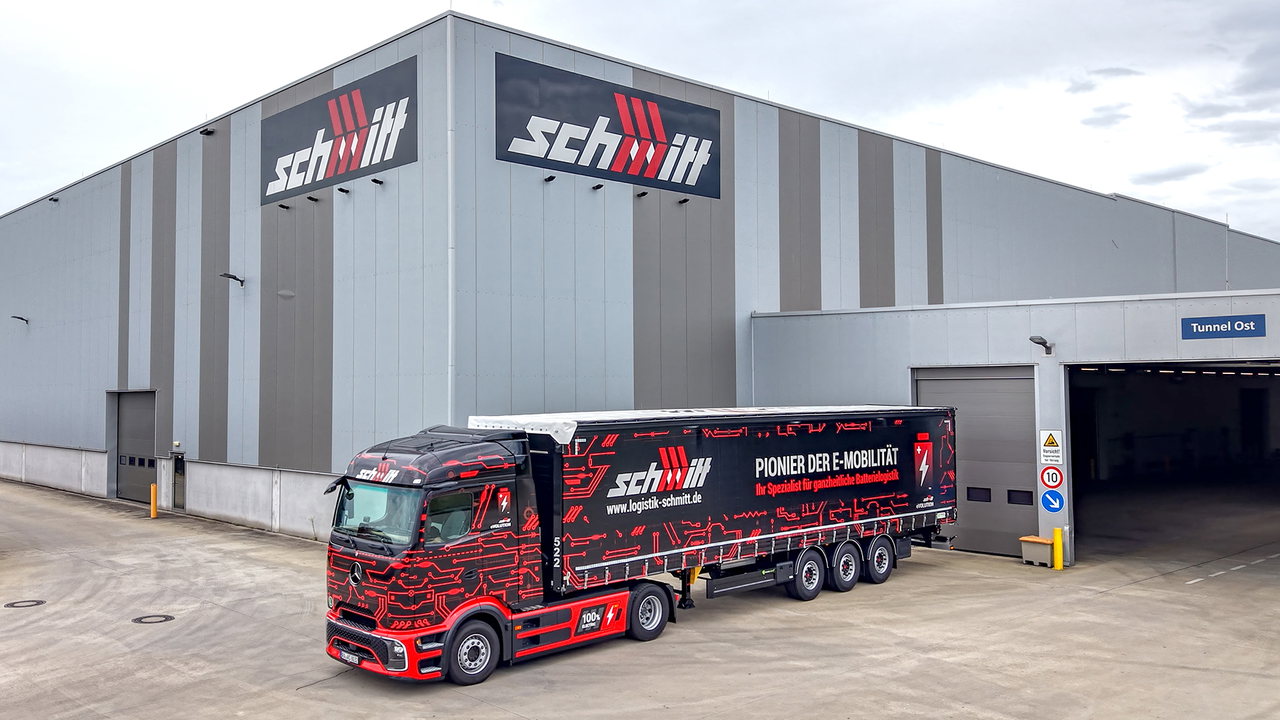
The BERGERecotrail LTOe ensures a full payload in Logistik Schmitt’s electric lorry fleet.

“With conventional trailers, we actually had to reduce the payload to avoid exceeding the legally permitted axle load.”
Rainer Schmitt, Managing Partner, Logistik Schmitt
60 centimetres that change everything
Consequently, the fleet experts at Logistik Schmitt set about looking for a trailer manufacturer who was prepared to alter the wheelbase. “We approached the trailer manufacturers, and Schmitz Cargobull was the only one to agree to move the axles that far forward,” recalls Christian Bommert, driver coordinator at Logistik Schmitt. The result is the BERGERecotrail Performance LTOe: its axles are positioned around 60cm further forward than on a standard trailer, thereby specifically relieving load from the tractor unit’s drive axle when fully loaded. This is combined with an extremely lightweight chassis and the Schmitz Cargobull curtainsider body, including the POWER CURTAIN load-securing tarpaulin – resulting in a total unladen weight of just 4.8 tonnes.
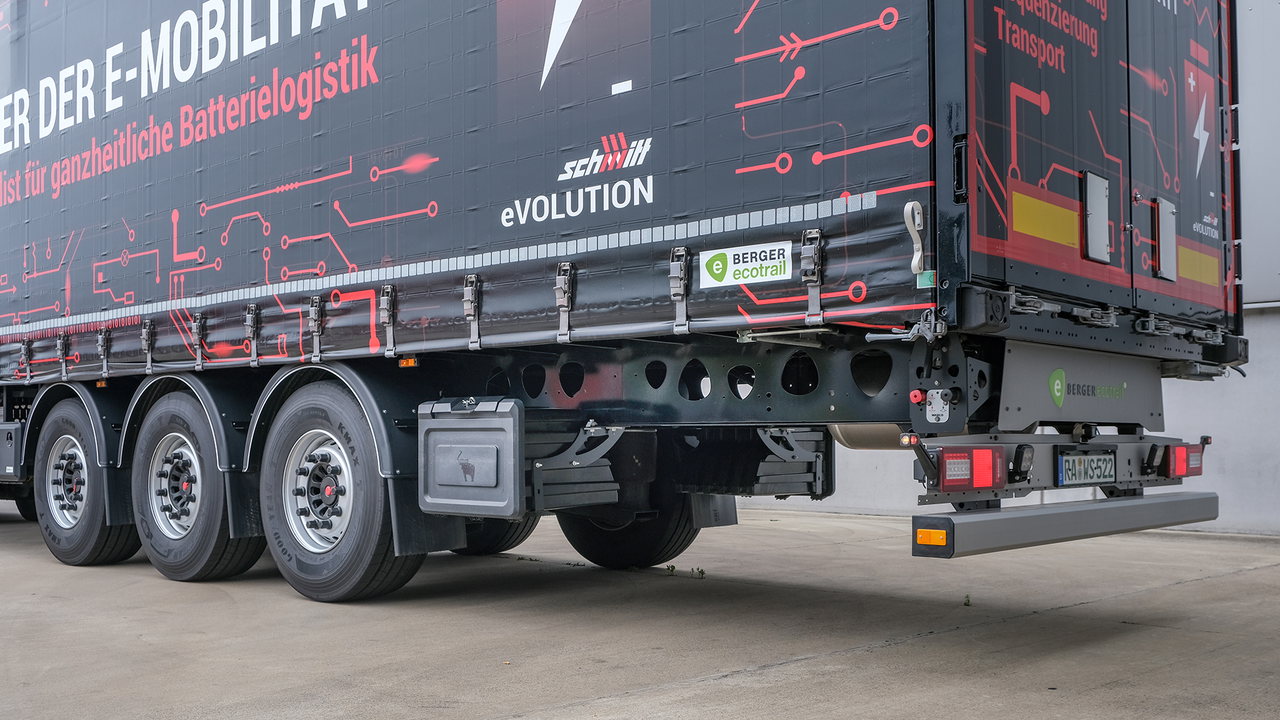
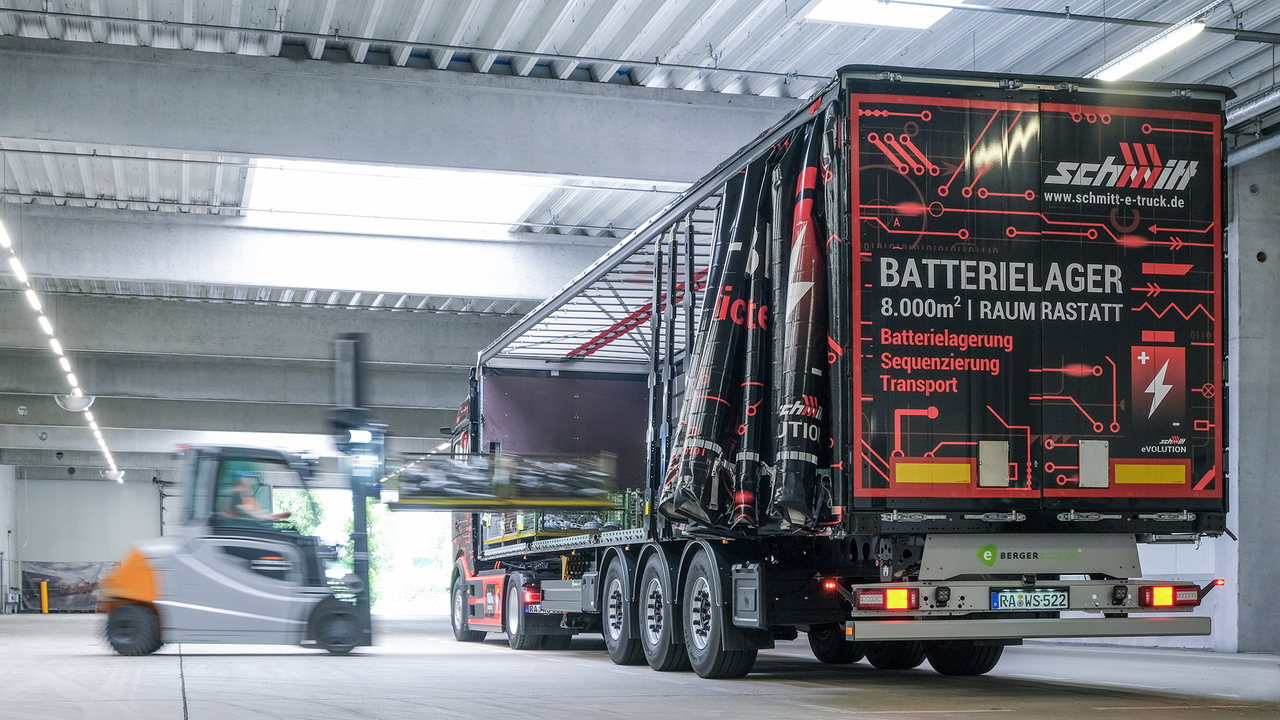
The axle assembly is positioned around 60cm further forward than on a standard trailer, which alters the load distribution in favour of the drive axle load.

“Schmitz Cargobull was the only manufacturer to have moved the axles so far forward.”
Christian Bommert, Driver Coordinator, Logistik Schmitt
40 of these trailers are now in service at Logistik Schmitt. What began as a bespoke solution for Logistik Schmitt is now offered as standard by Schmitz Cargobull. The loss of payload caused by the heavy electric tractor unit has not yet been fully offset – according to Schmitt, around 400kg are still lost – but the crucial difference has been made: “Essentially, the key thing is that we can operate at full capacity again. With the new, lightweight semi-trailer from Berger and Schmitz Cargobull, we can once again fulfil our customers’ orders at full capacity,” says Rainer Schmitt.
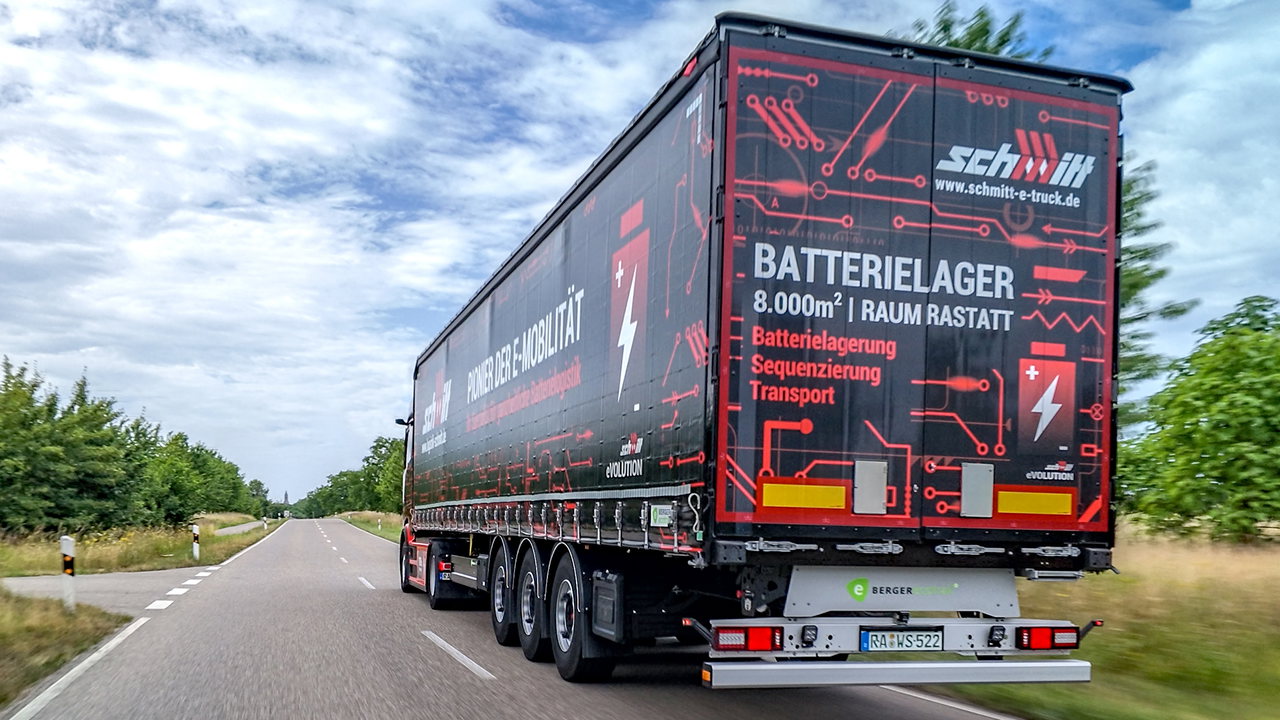
A 4.8-tonne lightweight: the BERGERecotrail with a body by Schmitz Cargobull.
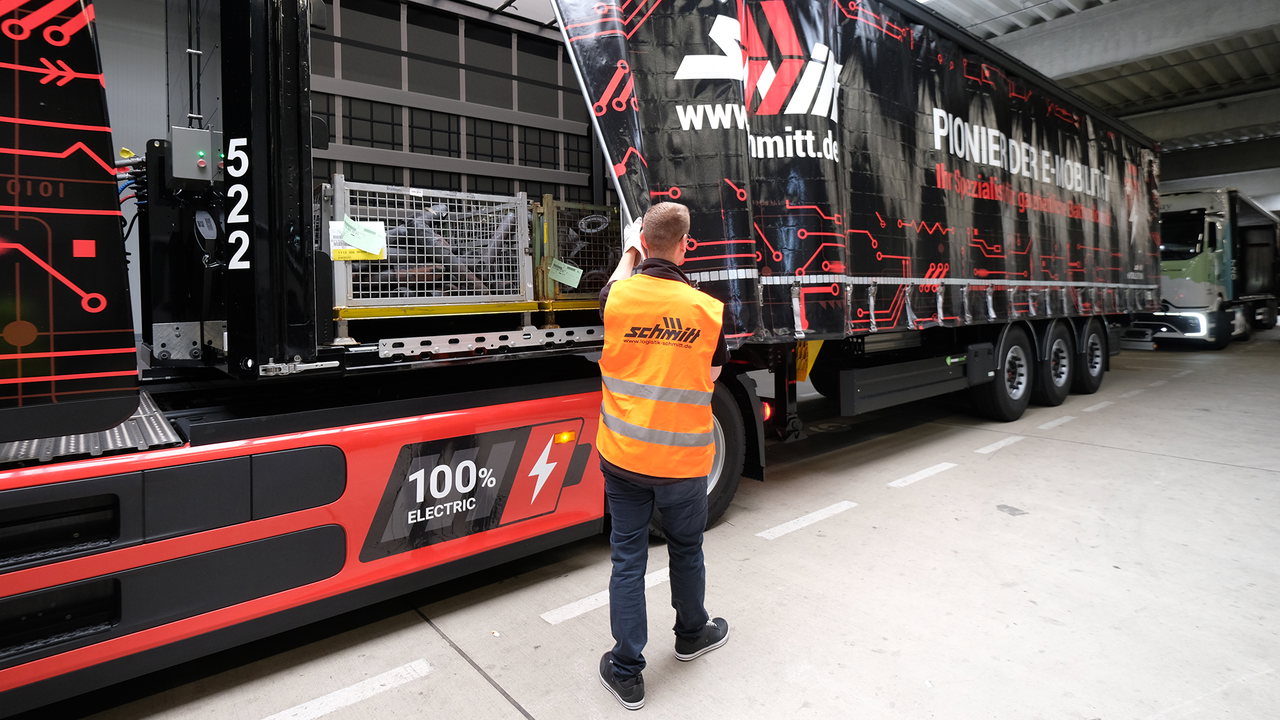
The POWER CURTAIN load-securing tarpaulin enables the semi-trailer to be loaded quickly and safely.
More than just weight
The lighter trailer also has an impact on energy consumption – and thus directly on the cost-effectiveness of the electric fleet. Logistik Schmitt currently estimates consumption at around one kilowatt-hour per kilometre and hopes to get closer to 0.9 kilowatt-hours thanks to the weight saving. “Electricity is becoming our new gold,” as Rainer Schmitt puts it.
The drivers also had to get used to the changes at first: due to the altered wheelbase, Logistik Schmitt is providing them with specific training on how the vehicles handle differently when turning, at roundabouts and when reversing. Overall, however, according to the company, the drivers are very satisfied with the new semi-trailers.
The resolution of the axle load issue is now even opening up new opportunities for Logistik Schmitt: Just recently, the company carried out its first electric transport operations for a new client in Austria – a contract that would not have been possible without an electric fleet. Plans are already underway for new contracts with clients in Switzerland. For other haulage firms now looking to get into e-mobility, electric transport pioneer Rainer Schmitt has some earnest advice: “Start today, not tomorrow.”
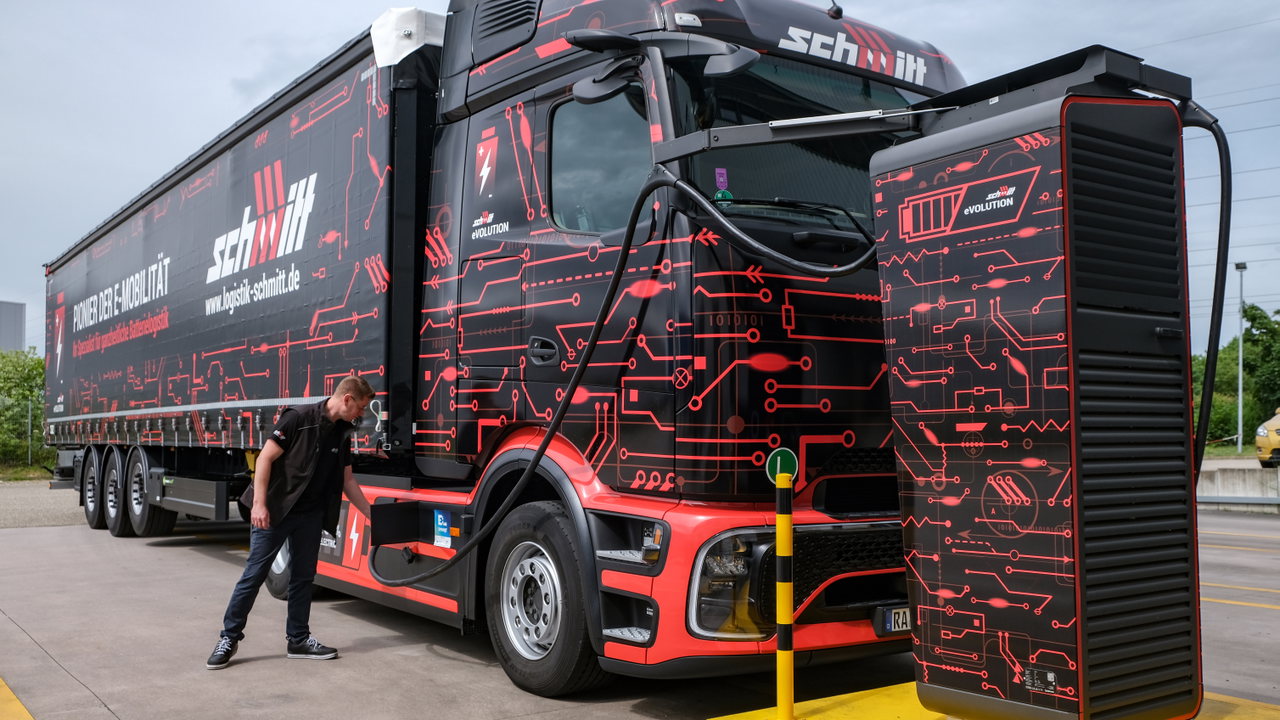
According to Schmitt, having your own charging points and sourcing electricity at a low cost are essential for the cost-effective operation of electric lorries.
About Logistik Schmitt
Logistik Schmitt is backed by Walter Schmitt GmbH, a third-generation family business headquartered in Bietigheim (Baden) with further sites in Mannheim, Karlsruhe, Rastatt, Durmersheim and Germersheim, amongst others. The contract logistics service provider is managed by Rainer Schmitt together with Managing Director Volker Klemm and Fleet Manager Christian Schmitt; around 360 employees serve customers in the automotive, paper manufacturing, packaging, drinks and retail sectors.
Schmitt is a pioneer in the e-mobility sector: the company has been operating an all-electric fleet since 2019, was the first German logistics company to put an eActros 300 into service, and was also among the first to adopt the eActros 600. Of its approximately 100 tractor units, 55 are now electric.